Sunday, July 21, 2013

Costa Rica, Pura Vida! Part I

A Walk on the Pacific Coast               13 July 2013


Damsel fly along a mangrove stream, Hacienda Baru

The sun rises just after 5:40 AM at Hacienda Baru.  Animals are quick to respond to the cool morning light, and the world is a symphony of songbird songs, hummingbird scolds, raucous parakeet flight calls, and insect sounds.  Gray-necked Wood Rails explode in a comically musical chorus that recalls the whimsical xylophone instrumentation of an old Laurel and Hardy sound film.  The distant crashing of Pacific surf soothes the acoustic landscape.   My feet find a well-worn trail, and I am quickly in pursuit of new things to see.  Almost every species here is new to me, and the ecological interactions, though somewhat familiar, are laced with extraordinary features that I have never had the good fortune to explore.

Black-hooded Antshrike, forested edge, Hacienda Baru

Sunbittern foraging in a mangrove stream, Hacienda Baru

The Cherrie's Tanager is ubiquitous, ever calling, filling the world with thin, tropical tanager sounds.  The males flash brilliant, scarlet rump patches as they flutter along branches in search of insects and berries.  The females form small crowds, sometimes chasing one another around in squawking groups.

Cherrie's Tanager, forested edge, Hacienda Baru


Cherrie's Tanager, male and female, forested edge, Hacienda Baru


By 7:30 AM, the sun has crested the mountains.  Almost instantly, I feel the heat on my neck.  The air grows humid, and sweat runs freely.  I head home to the cabina, home to find out what my family is doing.  They are up and eating breakfast, so I join them and cool off.

White-faced Capuchin monkey, mid-morning rest...

...and the contemplation of being...

Red-naped Woodpecker, possibly a hybrid with Hoffman's Woodpecker, enjoying over-ripe bananas.

As humidity is now part of the day, we plan a gentle hike for the day and resign to any sense of control about photographic light, weather, or anything else.  I have learned, reluctantly, that the tropics are less predictable than my own temperate home.   But I have also learned that photographic light here changes often, for better or worse, all day long.  The only way to chase the light here is to chase all day long.  This slow and silent "chasing", by the chances of intersection, will always result in something fascinating and new, an encounter with a spectacular animal.  So we slowly, merrily chase on.  Bruce reminds me to be open to what is there, to find art in serendipity. He is a good teacher.

Anole lizard, termite nest, and bamboo...

...unknown to me, a lizard with silvery eyes...

Colorful, yet cryptic, a group of skipper butterflies...How many do you see?

My friends, Bruce and Tamy Leventhal, have reminded me that food is abundant and everywhere.  Animals keep on the move.  Silent areas in the forest suddenly spring to life as a flock of birds follows a swarm of army ants or as a group of white-faced capuchin monkeys moves through the area in their omnivorous pursuits.   Finding wildlife in Hacienda Baru is as much about chance as it is about the rich and growing abundance of life in this successful experiment in ecological restoration.

White-necked Puffbird, forest interior, Hacienda Baru

White-faced capuchin...

...determined, yet dainty...

Hacienda Baru was once a cattle ranch.  Nestled between the Pacific Ocean and mountainous highlands, it was a fragmented mosaic of agricultural clearings and young forest.  Loving stewardship of the land and time, coupled with good science, are allowing Hacienda Baru to blossom into excellent wildlife habitat.  Large mammals are returning, and it is hoped that it will one day be a viable part of the corridor project to support Central America's tapirs.  If the tapirs will thrive, jaguars may thrive.  Tapirs, small relatives of elephants, and jaguars, the largest cats of the Americas, are umbrella species, animals that prove by their very presence that an ecosystem is strong, vital, and intact.  This year, Bruce has noticed that the coati population has been greatly checked into balance.  The coati is neither over-abundant nor tame anymore, proof that pumas are lurking.   The Hacienda Baru experiment is working!

Great Curassow, male and female in a forest clearing, are proof that this ecosystem is rapidly improving!

All images were photographed with a refurbished Canon 7D and a Canon 300mm f4L IS lens.  The tropics have transformed my technique, and most images were made using a Gitzo basalt tripod and Gitzo head and a Canon DSLR cable release.   Pura Vida!  (Pure Life! This is spoken often and so true of the Costa Rican people I have met! Gracias amigos! )  For an excellent ecological education, be sure to purchase and read Jack Ewing's "Monkeys are Made of Chocolate."  


Sunday, June 30, 2013

Biological Diversity--Threads in the Ecosystem Fabric


Where Raspberries Come From                                21 June 2013

A small bee, perhaps a native species, resting among the leaves of a raspberry...

There is wondrous complexity in the world, and it is helpful to think of nature’s processes as woven fabrics.  Sometimes, the fabric is tightly woven. Sometimes the fabric is loosely woven.  The strands have different sizes and different levels of importance, and there is little uniformity in the weave.  Sometimes, the strands cause bunching and lumping in the fabric, giving it unusual dimensions.   Biological diversity, the threads of nature’s fabric, builds a fabric that is difficult to grasp for those seeking uniformity and tidy neatness.  Nature’s order is beautiful in its chaos, but the forms and functions we see in this fabric have to do with the interactions of the threads, the unique variety of threads in the fabric we study. 

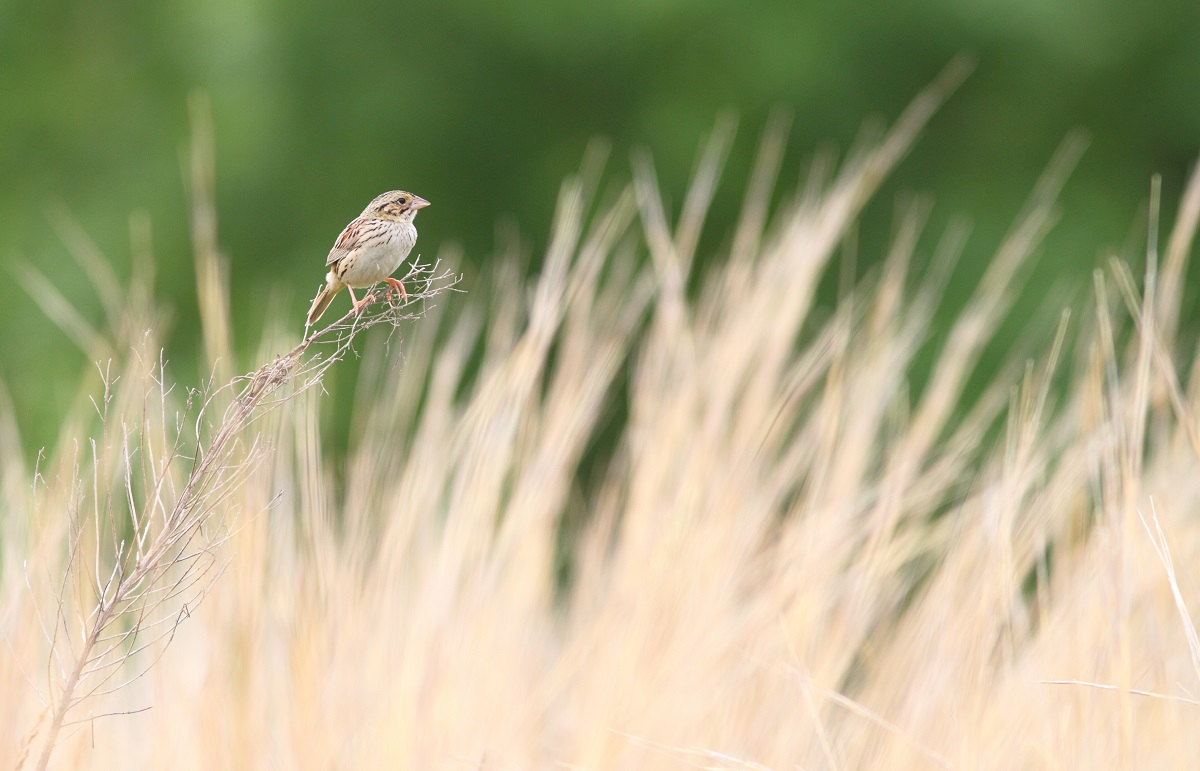
Henslow's Sparrow, a thread in the prairie fabric...

The Henslow’s Sparrow is a rare thread in the Great Lakes states.  The fabric in question is prairie, and the assortment of threads that makes the bird possible includes a few important connecting threads considered here… The first is that the prairie needs to have a taller grass component.  Secondly, it is very important that time and succession have allowed a dead thatch to build up beneath the rapidly growing live grasses.  Another is that the prairie needs to be quite large, quite expansive, largely free of trees and shrubs.  It even seems as though some rolling topography helps to weave in the Henslow’s Sparrow thread more strongly.   A large and complex prairie fabric will have spots in which different sorts of grasses, different sorts of heights, different sorts of microcosms are woven together, resulting in a rich assortment of avian threads.  These are woven in song as much as in function, and the chorus may include exuberant, nasal Bobolinks, musical Eastern Meadowlarks, lazily buzzing Grasshopper Sparrows, and bouncing Field Sparrow Songs.

A small, green, metallic bee and a raspberry flower...

We have a tendency to dutifully oversimplify ecological functions.  Recently we have all become students of bees, and most of us know that honey bees are experiencing precipitous population declines, that honey bees are the heroes that give us “one in every three mouthfuls of food”, and that honey bees’ colony collapse disorder is a real and serious problem.   But the truth is not so simple.  Before European honeybees were brought to this North American landscape, how on Earth did anything get pollinated?  It turns out there are many, many native species of bees as well, and they all continue to do the work of pollination.  In fact, it is likely that the native bee and wasp species are more abundant, more efficient, and more effective at pollinating a wider variety of plants.  After all, they are the threads of an older fabric here. They all deserve recognition in the news.


Strangely, we know very little about our native bees. Scientists are still working to find out which threads have broken, which threads have weakened, and if there are new threads in the fabric that could cause problems.  Could our use of many new pesticides and industrial chemicals be taxing the immune systems of our bees?   Pollinators are vastly important, lending to the pollination of agricultural crops and, more importantly, a rich and vast diversity of natural flowering plants growing wild in every functioning terrestrial ecosystems.  There are threads in the forest fabric such as American Basswood trees and Spotted-touch-me-not flowers, threads of wild food including blackberries, raspberries, black-caps, serviceberries and blueberries, that are pollinated by bees.  


We need bees.  Our ecosystem fabrics have been successfully bunching up around bee threads for 100 million years, and the bunching fabric has grown strong and tight amid the threads of bees.  I stood by a small patch of raspberry plants for about an hour with my camera ready. The rich diversity I witnessed in that hour was inspirational.  All of these bees were photographed in just an hour, in an area of about five by five feet.  Enjoy the threads of biological diversity, this gallery of “Where Raspberries Come From.”


All images were made with a refurbished Canon 7D and Canon 300mm f4L IS lens.  

Monday, June 24, 2013

The Fine Art of Mosquito Appreciation

Part of the Circle            18 June 2013

Porcupine, tolerating the mosquitoes

Part of the strange joy of a summer biological field season is the constant presence of biting insects.  While this may sound like a sarcastic play on irritating mosquitoes, my reality is widely defined by those insects that take blood meals.  They keep me sharp, wary, attentive, and probably help me achieve my proper intensity for the effective exploration and description of breeding bird communities.  I have grown to expect them, to interact with them, to tolerate them, and even miss them when the last day of the ornithology field season has rolled behind me and I awake in a safe, quiet room with no threat of dangers in the day.  


Golden-winged Warbler, a resident of mosquito-rich mosaics of bogs, sand plains, and forests

...and a scratcher of insect bites...

In the United States, too many of us have come to expect comfort and sterile isolation from the wild.  We have lost touch with what it feels like to be alive, and, as a grim result, we are guilty of destroying much of what we fail to experience.  Life…at times…feels like mosquitoes.  They remind us we are alive.  Here is a reality about mosquitoes that may change how you view them.

Blanding's Turtle suffering the abundance of summer mosquitoes

Ecosystems, including microscopic ecosystems, are interdependent systems, with many “cogs and wheels” that are closely connected, co-evolved, and necessary to proper function.  On the microscopic level, our immune systems are healthier when raided by a myriad of small parasites.  Like a bored dog, an idle immune system tears down its own home, the body, causing all sorts of autoimmune disease issues.  Perhaps it is the mosquitoes that keep beating back my own potential for Rheumatoid Arthritis.  June is a month of happy elbows and fingers as I hike hard, survey birds and their habitats, and feed thousands upon thousands of hungry mosquitoes.

A healthy porcupine, an individual, a microbial ecosystem...

...and a scratcher of mosquitoes...

...adaptation for climbing trees and swatting insects...

12:41 AM, 18 June 2013, respite in the cool of the night, a mother porcupine nurses her young

Mosquito and black fly larvae are critical biomass components in aquatic ecosystems, food for hundreds of other species, including damselflies, ducklings, and fish.  Deer flies serve a similar role in feeding dragonflies in the terrestrial realms.    Because so many species of biting flies (including mosquitoes) greatly increase their own reproductive potential by parasitism on the rest of us as they successfully consume a blood meal, it is our suffering that lends to a huge biotic potential in healthy ecosystems.  We join the circle.  We pay for ducks and fish with our own blood. 

Sandhill Crane, an animal built, in part, by invertebrate food sources...and indirectly, at times, built of mosquito biomass...

In the extreme case, I wonder how many animals die of exposure to parasites.  As much as they increase biotic potential, perhaps there are times when they limit it.   While I have learned to admire mosquitoes, I have also learned to admire those who tolerate them endlessly in the summer, those beings who can make no escape.   I believe that porcupines love a brisk November chill and that wolves seek more than just a warming sun as they bask on a January snow slope.  Those wolves and porcupines are remembering what it was to be bothered by a din of mosquitoes, and I believe they rejoice in a winter respite, a time of comfort.


All images were made using a refurbished Canon 7D and Canon 300mm fL IS lens.  Enjoying a great field season!


Thursday, June 13, 2013

Testing, Testing, 1, 2, 3...

The Better Beamer Tested...and the Canon 300 f4L IS as a "Macro"         

11 June 2013

Blue-gray Gnatcatcher
Wandering around in nature, I am using what I know to make opportunity.   Today my day began with a bundle of crazy (yes, Crazy!) bird surveys knocking around in back roads made of silt and water, gathering great data with great adventures along the way, decorating my van with mud!  There is glory in this life!  No guts, no glory!


As my day eased into "after work", I came upon a porcupine sampling the minerals of the gravel road.  I parked nearly a quarter of a mile away and spent more than twenty minutes stalking him.  While porcupines are not fast, they quickly leave "clean" photo range by sauntering into the tall grass.  I wanted him in the open, and I didn't want to ruin his day.  He was having fun, after all.  When the porcupine turned away, I stealthed a few paces closer... and closer... and closer...


When this porcupine finally realized my looming form was animate, he bristled and turned away.  I had never looked so closely at the array of quills.  I took a good look and put my 300mm to the test.  How much information about the living porcupine could I capture?  


While I succeeded in making the images, I failed in my efforts to avoid ruining his day.  The bothered rodent sauntered off into the water, hummocks, and leatherleaf of a small bog before climbing the bank to familiar oak forests.  He gave one last show of displeasure, which I captured as a sort of animalian floral bouquet.  Thorny roses, perhaps?


I meandered toward that Ol' Man River, the Mighty Mississippi to see what birds I might find.  I had just purchased a "Better Beamer" for my Canon 320 Speedlight, and I wanted to try it out on the small birds.  A pair of Prothonotary Warblers and a Blue-gray Gnatcatcher showed me, as best they could, how to use my new apparatus.  They shared the approval.

Prothonotary Warbler, male...Better Beamer and rainy overcast light

Prothonotary Warbler, male... Better Beamer and filtered sunlight through the canopy...

Prothonotary Warblers, male and female, natural light...

Where the Prothonotary Warblers live... Cavity nests in standing dead wood over open water...

Until more adventures find the page... Good Night! All images were made with a Canon Powershot SX230HS and a refurbished Canon 7D and Canon 300mm f4L IS lens...and a few with the Canon 320 Speed Lite flash unit and Better Beamer fresnel lens.