Saturday, May 25, 2013

Why We Do It, Part I

Celebrations in Waves of Biodiversity                                       23 May 2013


For nearly a week, the Saint Croix River valley has been bustling with the activity of thousands upon thousands of migrating songbirds, most of them Neotropical migrant birds arriving on territories and passing through, on to destinations further North.  They move in waves, in great mixed flocks, more than a dozen species rich in each and every small cloud of birds.  They adorn grasslands, fields, and prairie marshes.  They comb the trees and understory to devour forest insects, busily occupying different feeding niches, darting out to the ends of branches, fluttering upside down for an instant to pull a caterpillar away from a leaf, sallying out over open water to pull a midge fly from the air.

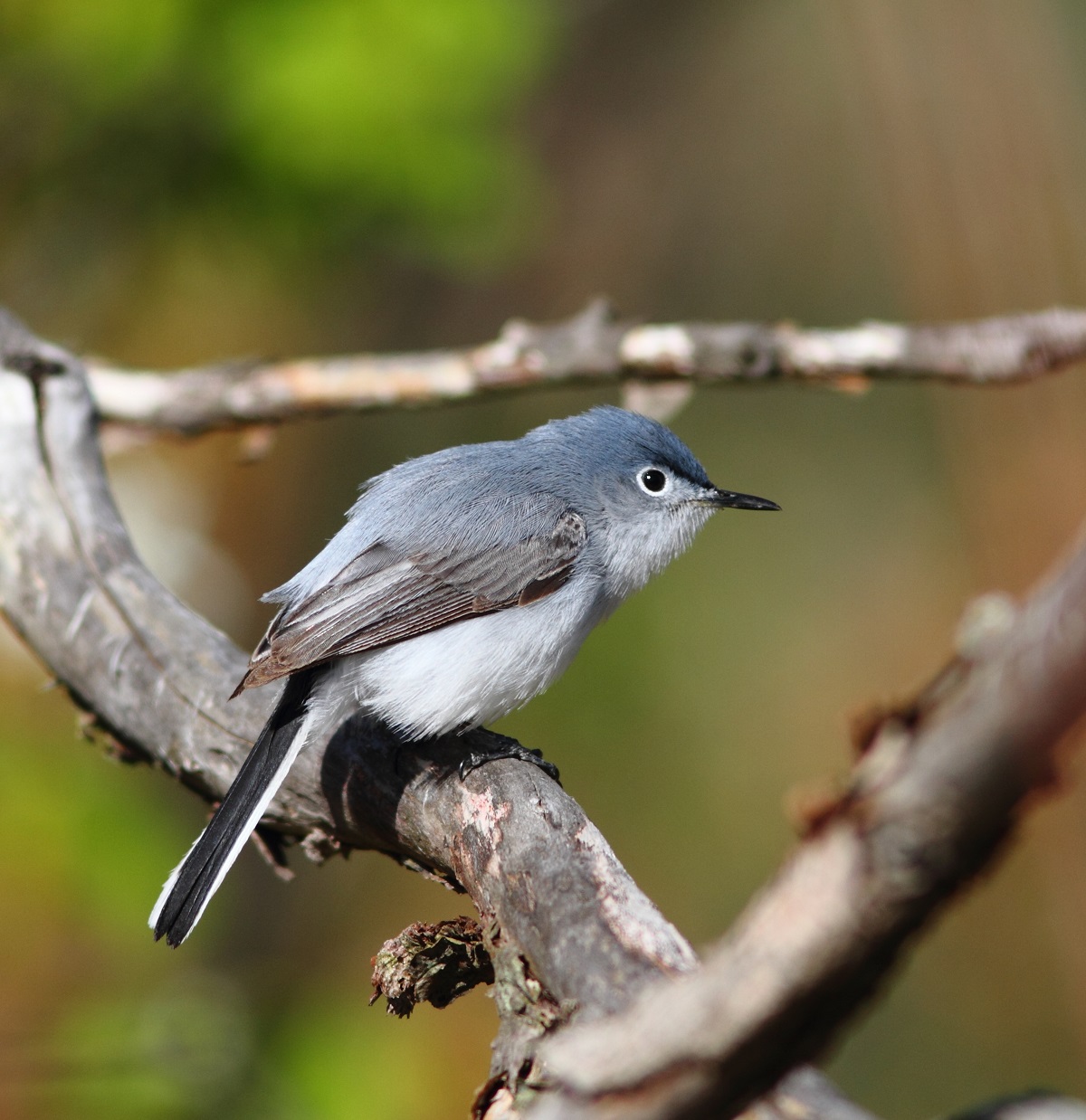
Blue-gray Gnatcatcher

Magnolia Warbler

Most people don't know these birds exist. The subtle buzzing "chip" and "zrrrrt" sounds go mostly unnoticed.  Without taking the time to visually comb the baby green leaves of Spring forests and stiff stems of a prairie remnant, the majority of these tiny birds are invisible.  For the few of us, the sounds are a gently exciting secret that beckons binoculars into the leaves.  Colors await, a feast for the mind, a celebration of biodiversity that is there for the prepared.

American Redstart, female

Veery

In today's day and age, secrets aren't so good.  Long ago, keeping secrets was part of keeping a good fishing hole or a favorite spot to pick berries.  Today, keeping secrets keeps others from learning, from loving, and ultimately from passionately protecting the spectacular living beauty that moves in seasonal pulses all around. We must share it freely.  Pass it on. Pay it forward. Walk the walk while holding a hand.

Savannah Sparrow

Black-and-white Warbler, male

Biodiversity.  The variety of life on earth.  Shape, color, essence, and personality.  Meaning and purpose in being, each species and each contributing member of every population plays an intimate part in the telling of Earth's natural history.  For those of us that go relentlessly afield with binoculars, cameras, sketchbooks, or hunting boots, biodiversity is equal in simple importance to water, shelter, and food.  It is a passion that runs deep in the genetic memory, connecting today with all that has ever happened.  This is why we do it.

Savannah Sparrow

All images were photographed in the spare moments of a busy teaching day, photographed with a refurbished Canon 7D and Canon 300mm f4 L IS lens.  

Sunday, May 19, 2013

Eastern Deciduous Forest Ramblings, Part I

The Stage is Set!                                                                         15 May 2013

Large-flowered Trillium

Days are long and warming.  Insect clouds ride thermals, back-lit above the river by a setting sun.  Baby leaves are budding and growing quickly.  The day's activity ends with a slow and steady chorus of birds.  Rose-breasted Grosbeaks, Scarlet Tanagers, Indigo Buntings, Black-and-white Warblers, Ovenbirds, and the slurring singers, the Blue-headed Vireos are here...  They have arrived!  The tropical forests have again reached 45 degrees north latitude.  They have arrived on the wings of birds.

Ostrya leaf-out on the Saint Croix River, a place for birds...

Blue-headed Vireo

The flowers are blooming a perfect complement to tropical plumage.  Black-capped Chickadees, sturdy year-round residents, are the age-old hosts and greeters of the avian tropical tourists.  Where chickadees sound off, bustling flocks of warblers follow.

 Black-capped Chickadee

Bloodroot

As quickly as the first green hues have pushed through dead leaves and waved off the last snows, some flowers are already pollinated and dropping petals.  Others are just getting started.

Marsh Marigold

Skunk Cabbage, Black Ant, and Filtered Sun

Spring Beauty Flowers, Trout Lily, and Equisetum

Trout Lily in Bloom


Underfoot, the ephemeral forest season blooms in a carpet of diverse forms and colors.  Up above, this diversity is echoed in the hurried activity of many passing migrant birds.

Large-flowered Trillium and Filtered Forest Light

All images were made with a refurbished Canon 7D and Canon 300mm f4L IS lens.

Monday, May 6, 2013

Mississippi River in Spring Time

Springing to Life in Wabasha, MN                                 5 May 2013

American White Pelican

Snow crashed in again on May 2nd and May 3rd, dropping tree limbs and covering forests, hills, and fields in another cold, wet blanket.  Finally, on the afternoon of May 4th, Spring pushed open the door and announced a firm commitment to stay.  I was in Wabasha, Minnesota, and the morning of May 5th warmed and soothed with the songs of Rose-breasted Grosbeaks and Baltimore Orioles distant to the ringing of Red-winged Blackbirds.   Yellow-rumped Warblers, Palm Warblers and Ruby-crowned Kinglets foraged on midge fly clouds that hung in the rapidly warming air.  Green leaf buds popped open, and snow melted rapidly from south-facing slopes.   As much as the snow had forced its way across the landscape, Spring now advanced rapidly in every sound, color, and form.


American White Pelican

Spring Ahead, Spring!  How we anticipate the march of the migrant birds!

Double-crested Cormorant

Melting snow, reflected sunlight

Double-crested Cormorant flight

Lesser Scaup drakes and hens

Horned Grebe

Great Egret and Blue-winged Teal

Great Egret, detail

Red-winged Blackbird

Red-winged Blackbird 

White-breasted Nuthatch, D.D. Kennedy Park, Polk County, WI 

Bufflehead Sunset, end of the day, Polk County, WI

All images were made with a refurbished Canon 7D, and a Canon 300mm f4L IS lens, handheld.  I used a Canon fluorite 1.4X converter on some images.

Sunday, April 21, 2013

Ice Age Respite

Sunshine on Perplexed Fauna                     20 April 2013

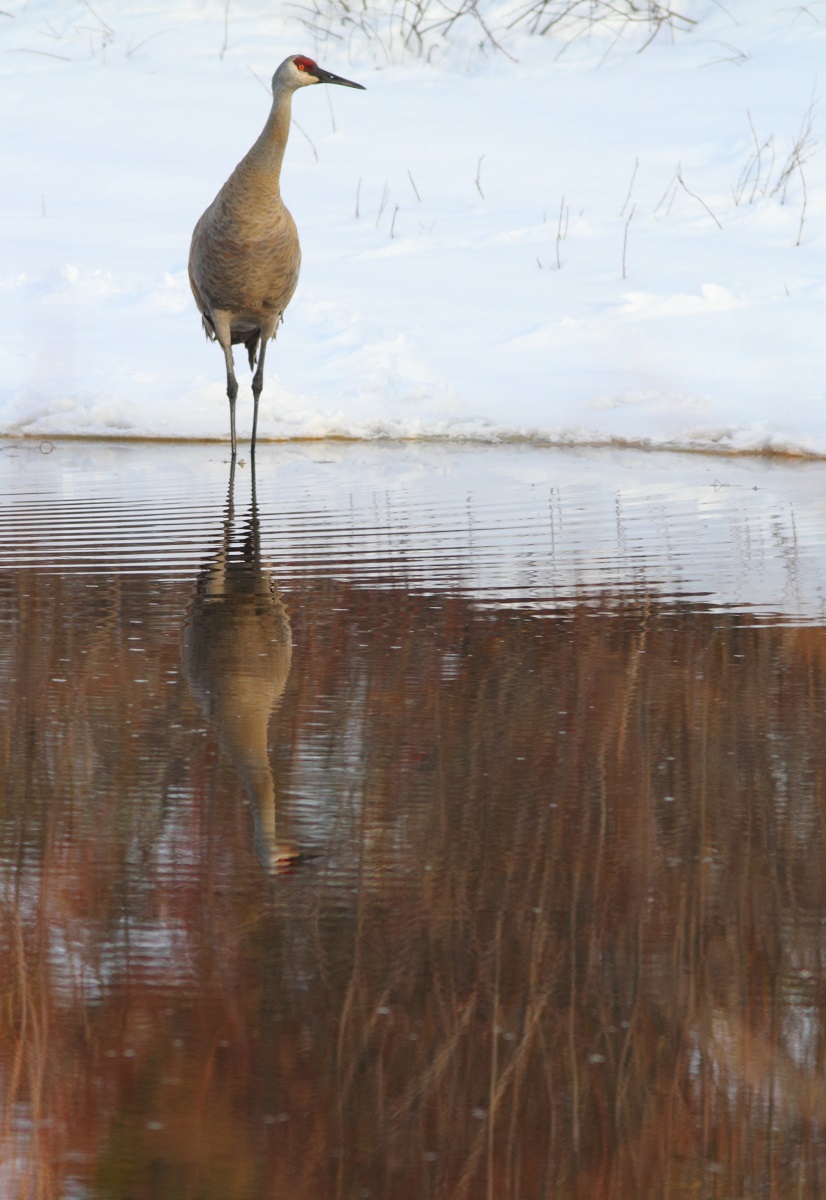
Sandhill Crane, patiently waiting...

For just a day, the sun is out and the April snowstorm is taking a deep breath. No wind last night, a crisp, cold dawn broke pushing orange sun into a cobalt blue sky.   Twenty degrees Fahrenheit didn't hold back the enthusiasm of birds eager to reach their breeding grounds, and new arrivals piled in on the heels of those who had halted with the snow.   Perhaps it is only the snow that prevents them from moving any further along in the journey.  Steadily, the number of birds using the sunflower seeds has been increasing.  

Dark-eyed Junco

Out in the bigger wilds, I have found a similar scenario.  Birds are eager to find open water, and birds that defend breeding territories in the sedge wetlands of this area have stumbled into Arctic winter visitors.   Great Horned Owls, so famous for nesting in the January snows, are rivaled in skill by this year's Bald Eagles, already incubating eggs.   Sandhill Cranes seem to be staring at ice and snow, willing it to melt away. Trumpeter Swans are strangely scarce.  Eagles are looking lean.  About a hundred miles south of us, there is no snow.  I imagine that a tremendous army of winged wildlife waits there, anxious to launch for the north.

Adult female Bald Eagle

Sandhill Crane

Sandhill Crane

Adult female Bald Eagle

Red-winged Blackbirds

We are living in a time of unpredictability.  Unusual climate change resonates in a foreign rhythm across the familiar and anticipated changes of the season.  Everything changes.  Change is the essence of biology, and there are always patterns within the patterns.  Dynamic Equilibrium.  Selection.  Nature reclaims life from destruction.  But now we must learn to deal with another less-understood layer--the anthropogenic ripples as they rock the phenology of our time.  It is a modern parallel to a time when humans sought to understand the wanderings of the moon and the tides that followed.  Patience... Hope... Spring?


The Arctic's Rough-legged Hawks are still here and congregating in large numbers across the frozen sedge meadows.   Their loitering is of some concern to Northern Harriers, arriving here recently to their usual breeding grounds.  This year, the bitter and extended winter is bringing to light a truth about Rough-legged Hawks and harriers.  They have the same ecological niche.  Now, so long as the Arctic birds are remaining, the harriers have fierce competition for their small mammal prey.   This stress is apparent, and harriers who catch voles have to be on the lookout for competing harriers, and, now, more aggressive cleptoparasitism from Rough-legged Hawks.

Rough-legged Hawk, a Winter visitor from the Arctic...Eats voles...

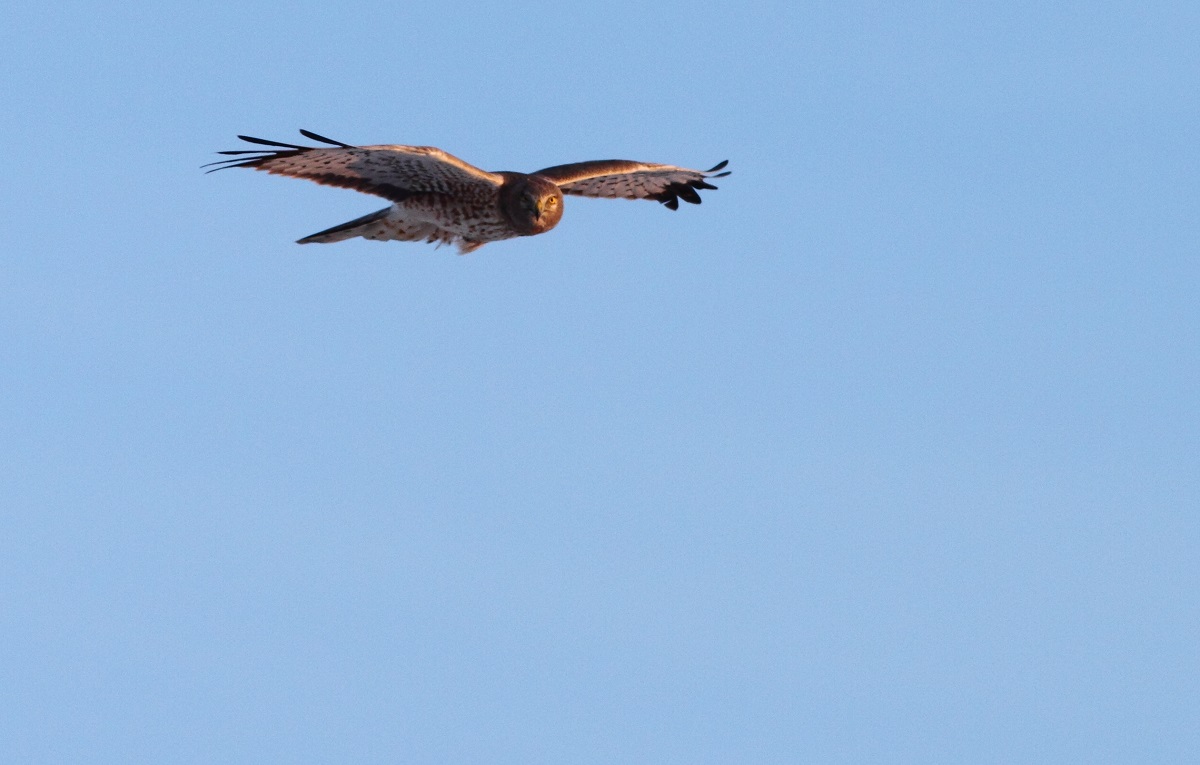
Northern Harrier, arriving on breeding territory... Eats voles...

Northern Harriers, brief competitive interaction...

At last light... A Rough-legged Hawk attempts to steal a vole from a harrier...

...gives chase...

...and succeeds. 
"Raptor" has its etymology in concepts of pirates, thieves, and risk-takers...

Red skies at night.  Sailor's delight.  It's what the old wisdom spoke of, but I know better.  We are living in different and unusual times.  Behind the veil of peace, pink skies, and no wind, I see mare's tails in the stratosphere, long waves of ice crystals that predict more snow for the 21st of April, and another day of Winter in Spring.


All images were made with a refurbished Canon 7D and prime Canon 300mm f4 L IS lens.  It was a day of "run and gun" photography with no tripod.  I hiked in snow all evening, some drifts as deep as 2 feet, and always 8 inches or more.  The "ice" on wild ponds was deceptive, a layer of steel-gray slush that gave way immediately underfoot.  "Ma" and "Pa", my trusty swans, were nowhere to be seen.  A Bald Eagle tried to catch a Canada Goose.  A Northern Shrike, perched on a lone alder, said, "Winter's still here, buddy."